Integrating artificial intelligence and Digital Twin technologies into robotic and automated systems
remains challenging, particularly in ensuring interoperability and seamless interaction among various
components within complex operational environments. Although many individual technologies have matured
significantly, standardized integration methodologies and robust interfaces remain underdeveloped,
limiting broad industrial adoption and scalability.
This workshop addresses these critical gaps by focusing on AI-driven integration solutions enhanced
through Digital Twin technologies, which provide real-time synchronization, accurate simulation, and
improved reliability of robotic systems. By gathering experts from academia, industry, and startups,
the workshop will discuss practical methodologies, standardization strategies, and successful case
studies, emphasizing the importance of overcoming integration barriers to achieve scalable, efficient,
and reliable robotic solutions.
Topics of Interest
- AI-driven integration methodologies for robotic and automated systems
- Practical case studies of robotic system integration in manufacturing, logistics, and construction
- Standardization and interoperability in robotic integration
- Reliability and robustness of integrated robotic systems
- Ethical considerations and societal acceptance of AI-enhanced semi-automatic systems
- Human-robot interaction and collaboration in automated and semi-automatic contexts
- Accessibility and inclusivity through AI-enhanced robotics
- Digital Twin technologies as enablers of robotic system integration
- Industrial perspectives and experiences in adopting integrated robotic systems
- Emerging trends and future directions in robotic and automated system integration
| Time |
Format |
Speaker |
Title |
| 14:00–14:10 |
Opening & Welcome |
Organizers |
Workshop introduction and goals |
| SESSION I: Methods & Architectures |
| 14:10–14:30 |
Invited Talk I |
Thrishantha Nanayakkara |
Situated Heuristics-Based Evolution of Mechanically Intelligent Systems (SHAPE) |
| 14:30–14:50 |
Invited Talk II |
Darius Burschka |
Vision-Based Parametrization of the Digital Twin in Dynamic Environments through Analysis of Action Constraints |
| 14:50–14:55 |
Lightning Talk |
Pranjal Mishra |
ArtiTwinSplat: Interactable Digital Twin Reconstruction via Gaussian Splatting from RGB-D Videos |
| 14:55–15:00 |
Lightning Talk |
Ekta U. Samani |
Programming Manufacturing Robots with Imperfect AI: LLMs as Tuning Experts for FDM Print Configuration Selection |
| 15:00–15:05 |
Lightning Talk |
Antonio Salcuni |
Multi-Agent Sequential Decision-Making for Autonomous Carpooling |
| 15:05–15:10 |
Lightning Talk |
Tanmay Samak, Chinmay Samak |
When Digital Twins Meet Large Language Models: Realistic, Interactive, and Editable Simulation for Autonomous Driving |
| 15:10–15:25 |
Poster & Demo Session |
All accepted contributors |
Posters, startup demos, and networking |
| Coffee Break |
| 15:25–15:40 |
Break |
— |
Coffee break and informal discussion |
| SESSION II: Validation, Deployment & Applied Perspectives |
| 15:40–16:00 |
Invited Talk III |
Agostino Marcello Mangini |
A Digital Twin Approach for a New Concept of Last-Mile Delivery |
| 16:00–16:20 |
Invited Talk IV |
Jing Xiao |
Dynamic Dense Packing of Novel Objects |
| 16:20–16:35 |
Industry Invited Talk |
Chao Wang |
XR as an Interaction Digital Twin: Teaching, Expressing, and Validating Robots with Humans in the Loop |
| 16:35–16:40 |
Startup Spotlight |
Kevin Patel |
Agentic AI on the Manufacturing Floor – Robotic Intelligence and 3D Simulation for Autonomous Operations |
| 16:40–16:45 |
Startup Spotlight |
Michele Marvulli |
pluma: Reliable AI Infrastructure for Industrial Automation |
| 16:45–16:50 |
Startup Spotlight |
Daniele Bernardini |
Cognivix — Startup contribution (title TBA) |
| 16:50–16:55 |
Startup Spotlight |
Paolo Fiorini |
Needleye Robotics — Startup contribution (title TBA) |
| 16:55–17:00 |
Lightning Talk |
Thomas Becker |
A Digital Twin Framework for Vision-Guided Hose Manipulation in Pharmaceutical Automation |
| 17:00–17:05 |
Lightning Talk |
Gokul Narayanan |
A Deployment Case Study in Robotic Apparel Automation: Digital Twin Integration, Interoperability, and Workforce Enablement |
| 17:05–17:10 |
Lightning Talk |
Yi Huang |
A Finite Element-Driven Intelligent Digital Twin of Milling Dynamics for Real-Time Monitoring and Chatter Suppression |
| 17:10–17:15 |
Lightning Talk |
Dominik Hujo-Lauer |
Uniform Modeling and Integration of Humans and Robots in Industrial Automation Systems |
| 17:15–17:20 |
Lightning Talk |
Zhenxiang Huang |
Orchestrating a Multi-Robot Micro-Factory: Cyber-Physical System for Timber Manufacturing |
| SESSION III: Closing |
| 17:20–17:30 |
Awards & Closing |
Organizers |
Awards, concluding remarks, and next steps |
- Md Mahinur Alam — AI-Driven Digital Twin Framework for Warehouse Logistics Automation Optimization
- Mojtaba Sharifzadeh — Model-Structured Neural Networks for Road Condition Identification in AI-Enabled Digital Twin Architecture
- Rawaan Abu-Shaera — From Design to Realization: A Validated Pipeline for Magnetic Soft Robot Fabrication and Actuation
- Carlos Manuel Torre Sada — Hybrid Sparse-Model Next-Best-View Planning for Active 3D Reconstruction for Digital Twins
Speakers
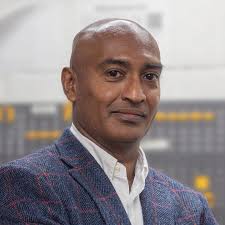
Thrishantha Nanayakkara Academic
Director, Morphlab — Dyson School of Design Engineering, Imperial College London (UK)
Darius Burschka Academic
Head, Machine Vision & Perception Group — Technical University of Munich (Germany)

Agostino Marcello Mangini Academic
Dept. of Electrical & Information Engineering — Politecnico di Bari (Italy)
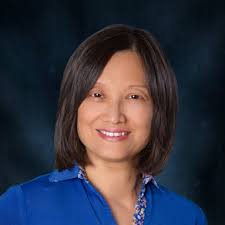
Jing Xiao Academic
Head, Dept. of Robotics Engineering; Director, AIR Lab — Worcester Polytechnic Institute (USA)
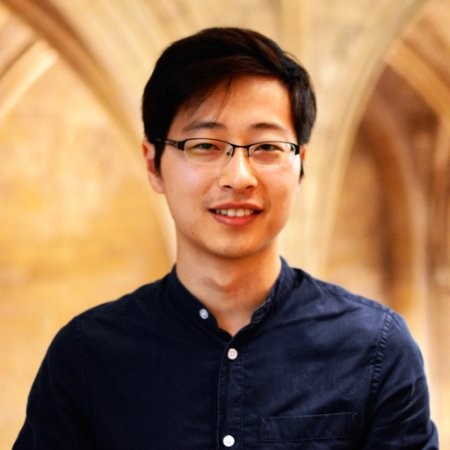
Chao Wang Industry
Principal Scientist — Honda Research Institute Europe (Germany)
We invite short papers (2–4 pages) and extended abstracts (1–2 pages) on
Digital-Twin–enabled integration for robotics—methods, tools, datasets, and
case studies (interoperability, synchronization, simulation/verification,
deployment experience). Contributions should emphasize new ideas, practical
insights, and real-world integration experience.
Accepted contributions will be presented as 5-minute lightning talks and posters,
with selected teams featured in a dedicated Startup Spotlight session.
Submissions should be provided as PDF (IEEE style preferred).
Startup Spotlight
Startup and industry teams developing AI-driven robotic integration
and Digital Twin solutions are especially encouraged to apply.
Selected startups will present in a dedicated 5-minute Spotlight session
and poster/demo space focused on real-world deployment and integration challenges.
- Submission deadline: April 20, 2026 (23:59 AoE)
- Notification of acceptance: May 5, 2026
- Submission format: 2–4 page short paper or 1–2 page extended abstract (PDF, IEEE style preferred)
- Submission portal: Google Form
- Presentation format: lightning talk + poster or Startup Spotlight
Awards & Participant Support
This workshop is supported by the
IEEE RAS Automation Cluster
.
The workshop includes awards and participation grants to encourage
early-career researchers and startup contributors.
- Best Startup Perspective Award: USD 200
- Best Lightning Talk Award: USD 200
- Participation Grants: Two grants of USD 300 each for early-career researchers or young startup founders
Participation grants are intended to support early-career researchers and young startup founders.
Awards and grants will be determined by the organizing committee based on submission quality and relevance to the workshop themes.
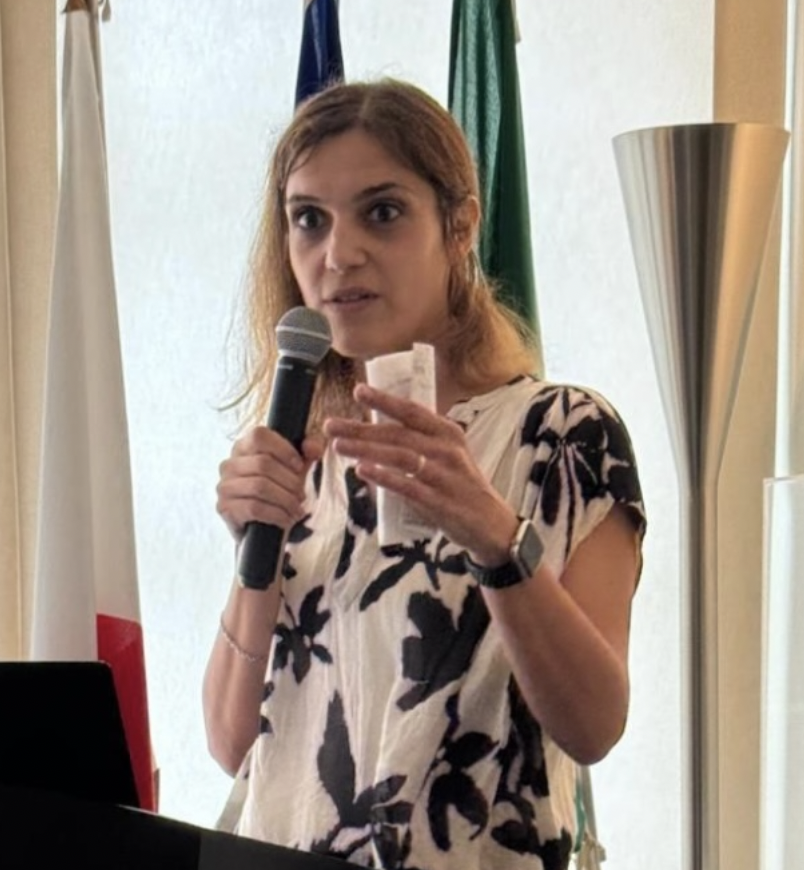
Angela Faragasso
Workshop Organizer

Birgit Vogel‑Heuser
Technical University of Munich, Germany

Maria Pia Fanti
Politecnico di Bari, Italy